Carrots are known for their high amounts of carotenoids, including lutein and zeaxanthin, which have been shown to support eye heath. Other nutrients found in carrots are vitamin A, calcium, potassium, magnesium, phosphorus, vitamin C, and fiber.
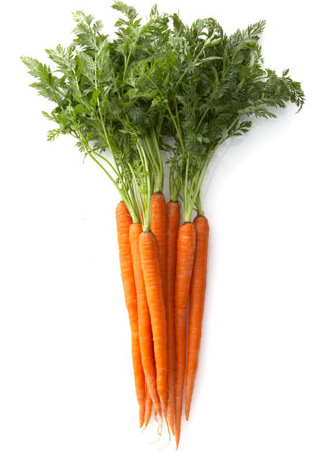
Cooking carrots helps to make the nutrients more bioavailable, and eating the carrots with a little bit of fat will also help with absorption of these vital nutrients. (Just don’t overcook!)
Carrot Shake: Carrot Ginger
1/2 cup fresh carrot juice
1/2 inch fresh ginger, peeled, chopped
teaspoon fresh lemon juice
Lunch: Warm Carrots
1 pound mini carrots
Water
2 x teaspoons whole-leaf stevia powder
4 x teaspoons plus 1 x tablespoon butter, divided
Sea salt and pepper
Place carrots into a large saucepan and cover with water. Bring this to a boil. Add butter and stevia. Boil uncovered, skimming frequently until liquid is reduced to almost nothing and carrots are well coated. Add remaining butter and season to taste. Serves 2-4.
Dinner: Carrot Curry
1 pound mini carrots
4 x tablespcons coconut oil
1 x teaspoon mustard seeds
2 x teaspoons cumin
2 x teaspoons coriander
2 x teaspoons turmeric
1 x teaspoon fenugreek seeds
1 x teaspoon dried dill
2 x medium onions, peeled, sliced
2 x red bell peppers, stems and seeds removed, sliced
3-4 cups vegetable stock
Zest from 1 orange
1 x tablesoon fresh ginger, grated
2 x tablespcons coconut flour mixed with 2 tablespoons water
2 x cups fresh spinach leaves, chopped
Sea salt and pepper
In a large sauté pan, melt coconut oil. Sauté all the spices for 3-5 minutes, stirring constantly. Add onion and sauté until soft. Add peppers and carrots and sauté for another 3 minutes. Add stock, ginger, and orange zest and bring to a mil. Reduce heat to simmer until carrots are tender, about 15 minutes. Slowly add coconut mixture until mixture is of desired thickness. Add spinach and season to taste. Serves 4.